In retail, the buying decision doesn’t start with the product — it starts with what gets noticed. Customers are exposed to dozens, sometimes hundreds of options in a very short time, and purchasing decisions are no longer the result of careful analysis, but of quick reactions. In this context, shelf communication becomes a critical tool, capable of turning an ordinary product into an obvious choice.
The shelf is no longer just a display space, but a direct point of contact between brand and customer. It is where the product “speaks,” and the way this message is delivered has a direct impact on purchasing behavior. Visibility, clarity, and consistency are not aesthetic details — they are drivers of commercial performance.
Price Rails and Information Clarity
The most basic level of shelf communication is also the most frequently overlooked: proper price display. Price rails are not just functional accessories; they contribute to shelf readability and customer trust. A price that is easy to spot, well-aligned, and correctly positioned reduces decision time and eliminates frustration.
Without clear organization, customers are forced to search for information, and even a small effort can lead to hesitation or abandonment. In contrast, a well-structured system of price rails creates a smooth experience, where each product is easy to understand and compare. This apparent simplicity has a direct impact on conversion.
Display Supports and Message Highlighting
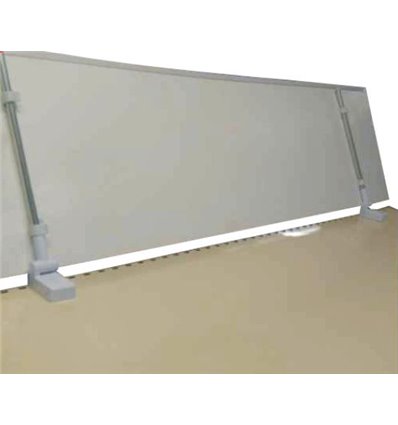
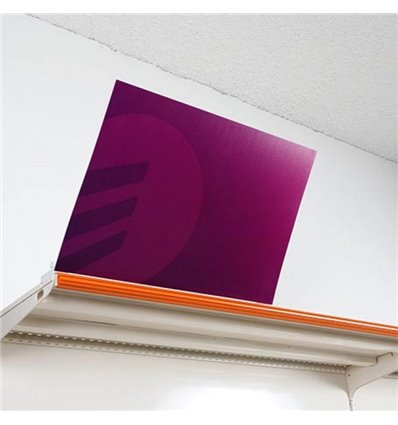
Beyond pricing, there is a need to communicate additional information: promotions, benefits, new arrivals, or recommendations. This is where display supports come into play, designed to highlight key messages without visually overcrowding the space.
A well-chosen support positions the message directly within the customer’s field of view, without requiring effort. Whether we are talking about poster frames, mounting systems, or shelf accessories, all these elements help create a clear visual hierarchy. Customers quickly understand what matters and can direct their attention effortlessly.
The effectiveness of these solutions is not about complexity, but relevance. One well-positioned message is more valuable than multiple scattered ones.
Wobblers and the Dynamics of Attention
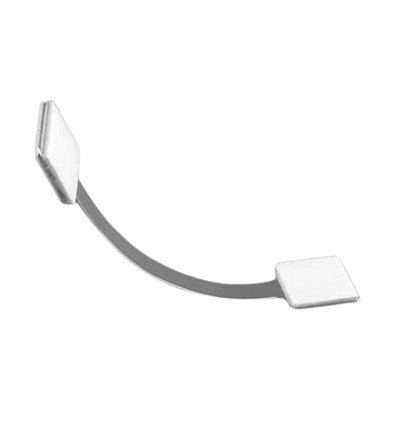
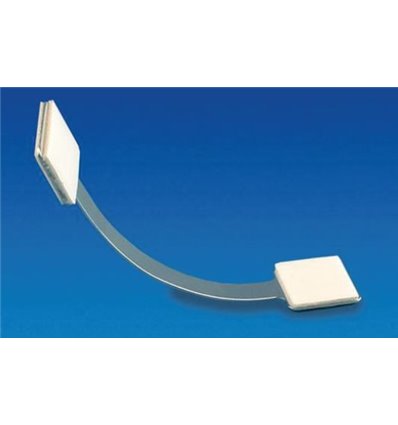
In a static environment, any element that introduces movement or contrast naturally stands out. Wobblers are designed precisely for this purpose: to capture attention in a subtle yet effective way. They act as visual triggers, guiding the customer’s gaze toward a specific product or promotion.
When used correctly, these elements do not disrupt the experience — they enhance it. They add rhythm to the shelf, break visual monotony, and introduce an additional layer of communication. Without them, many products remain “invisible,” even when properly positioned.
Mounting Systems and Flexibility
Another essential aspect of shelf communication is flexibility. Retail spaces are dynamic, with frequent changes in promotions and messaging. Mounting systems — whether clips, magnets, or adjustable supports — allow for quick adaptation without complicated interventions.
These solutions are not just practical, but strategic. They provide the freedom to test, adjust, and optimize message placement based on performance. In high-performing retail environments, the ability to react quickly is a real competitive advantage.
At the same time, these systems help maintain a clean and professional appearance. Messages are securely fixed, without improvisation, and the overall store image remains consistent.
Visual Consistency and Customer Experience
All these elements — price rails, display supports, wobblers, mounting systems — do not work in isolation. They are part of a broader system where consistency is essential. A store where every element is chosen and positioned with intention communicates professionalism and control.
Customers do not consciously analyze these details, but they perceive them as a whole. When information is clear, messages are well organized, and visibility is optimized, the experience feels natural. Otherwise, confusion arises, making the purchasing process more difficult.
Visual consistency does not mean rigid uniformity — it means harmony. It ensures that every element contributes to the same objective: making the buying decision easier.
Shelf Communication as a Sales Strategy
In today’s retail landscape, shelf communication is no longer an operational detail — it is a strategy. Every product needs context, and that context is created through presentation. It is not enough for a product to be available. It must be visible, understood, and relevant.
Stores that treat shelf communication as a priority manage to transform space into a true sales tool. They do not leave decisions to chance, but guide them subtly through clarity and structure.
Ultimately, the difference is not necessarily the product itself, but how it is presented. And when the shelf is well organized and supported by the right solutions, it becomes more than a display — it becomes a powerful sales argument.